From external obligation to national commitment: reframing the importance of NDC climate governance
In 2025, Indonesia formalized its Second Nationally Determined Contribution (SNDC), establishing the country’s Carbon Economic Value (NEK) framework and binding 12 ministries to carbon emission targets. However, the NDC was still widely perceived as an external obligation rather than a national priority, with the burden of delivery mainly placed on the Ministry of Environment.
Through a six-month collaboration with the Research Center for Climate Change of Universitas Indonesia (RCCC UI), Think Policy worked with ministries across government to examine the governance challenges surrounding the NDC. This initiative showed that enduring climate action at the national level takes more than technical compliance. It needs a shared understanding of why climate action matters, who is responsible for delivering it, and why alignment across institutions needs to be strengthened.
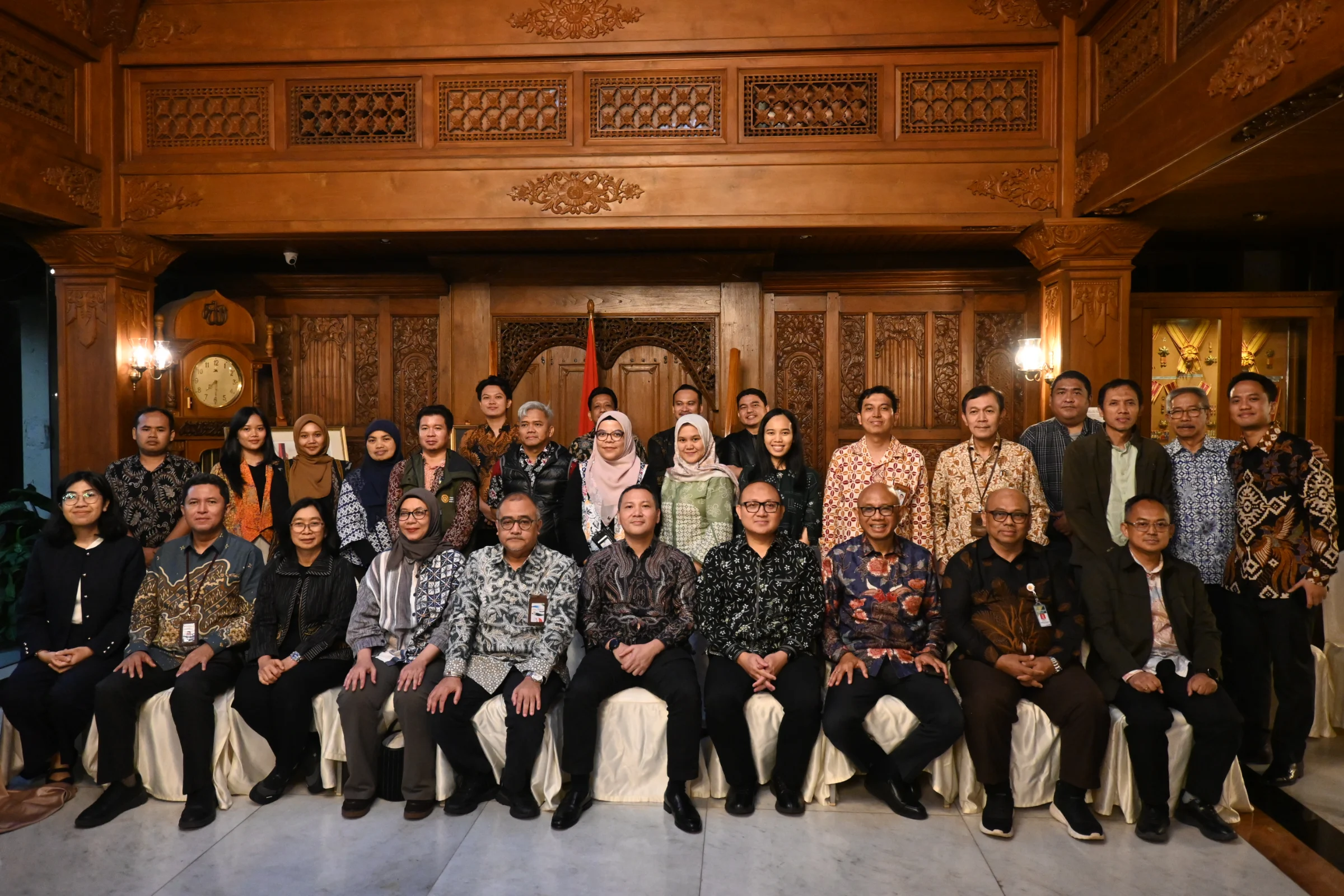
coordinating, key, and sectoral ministries engaged, represented by 6 Deputy / Director-Generals and 13 Directors
expressed by high-level officials in the Ministry of Environment and other ministries
into each ministry’s own agenda and narrative, rather than an added task on a compliance checklist
How to make the NDC a shared cross-sectoral national agenda
In 2025, Indonesia entered a pivotal moment in its climate commitment as the government formalized its Second Nationally Determined Contribution (Second NDC) and issued Presidential Regulation No. 110/2025 on Carbon Economic Value (Nilai Ekonomi Karbon, NEK), reinforcing the country’s commitment to reducing emissions and building climate resilience. The NDC is a national climate action plan under the Paris Agreement that embodies each country’s efforts to reduce greenhouse gas emissions and adapt to the impacts of climate change.
On paper, the foundations were in place. Indonesia’s climate commitments cut across more than a dozen coordinating, key, and sectoral ministries, reflecting the reality that climate change is not only an environmental issue, but one that affects energy, food security, infrastructure, industry, and economic development.
However, translating these commitments into coordinated cross-sectoral action proved more challenging. Despite being a cross-ministerial mandate, responsibility for delivering Indonesia’s climate targets was often perceived as resting primarily with the Ministry of Environment. As other ministries focused on their own priorities, climate action frequently became viewed as an additional obligation rather than a shared national agenda.
As such, implementation of climate targets remained siloed among institutions. Climate policy was often understood as an externally driven commitment linked to international agreements rather than as a vehicle for advancing the country’s own development priorities.
But this also presented a significant opportunity. The issuance of Presidential Regulation No. 110/2025 opened a window to strengthen climate governance across ministries. Rather than treating climate commitments as a sector-by-sector compliance exercise, government institutions could begin reframing them as part of a broader national agenda that supports domestic priorities from food security and energy transition to disaster resilience.
Recognizing this opportunity, Think Policy and RCCC UI worked with ministries across government to better understand the institutional barriers, incentives, and narratives shaping NDC implementation. The goal was not only to improve coordination, but to foster a stronger sense of shared ownership over Indonesia’s climate commitments.
Two approaches for reframing NDC climate governance among ministries
Carbon accounting and MRV (measurement, reporting, verification) systems are technical in nature, but they only function when ministries share a common understanding and commitment to using them. We worked with ministries to identify barriers to interoperability across climate reporting systems and develop recommendations that could be adopted across sectors.
Building support for NDC implementation required understanding the political realities of how ministries coordinate, make decisions, and set priorities. Through political economy analysis and strategic engagements across 12 ministries, we mapped the incentives and relationships needed to strengthen collective ownership of Indonesia’s climate commitments.
Building ownership and alignment across Indonesia’s climate governance ecosystem
The challenge facing Indonesia’s NDC implementation was not simply technical. While ministries were expected to contribute toward a shared climate agenda, stakeholder buy-in remained uneven, institutional roles were still evolving, and the transition from Presidential Regulation No. 98/2021 to No. 110/2025 created uncertainty around governance and coordination mechanisms.
To address these challenges, Think Policy and RCCC UI focused on strengthening both the technical and political foundations of NDC governance through three complementary approaches.
1. Building political buy-in beyond the Ministry of Environment
One of the project’s early challenges was limited stakeholder ownership across ministries. Although Indonesia’s NDC commitments require contributions from multiple institutions, climate action was still widely perceived as the responsibility of the Ministry of Environment rather than a shared government priority.
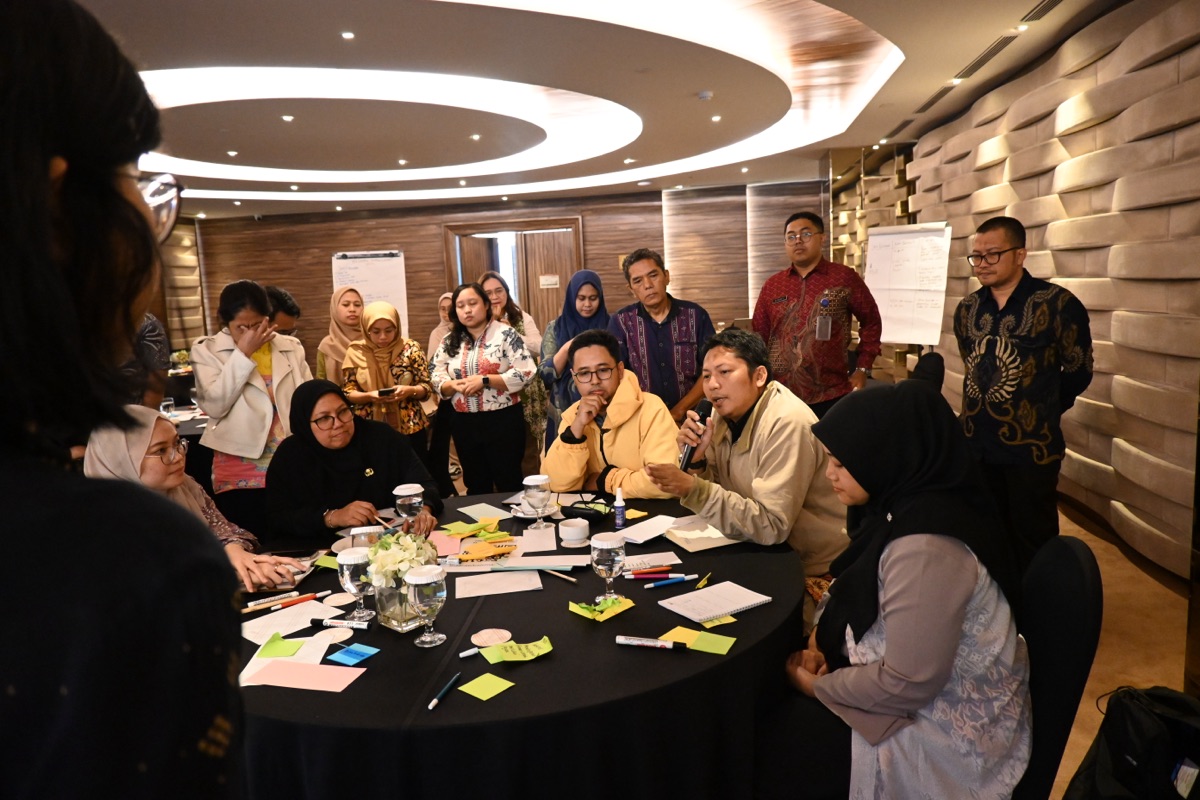
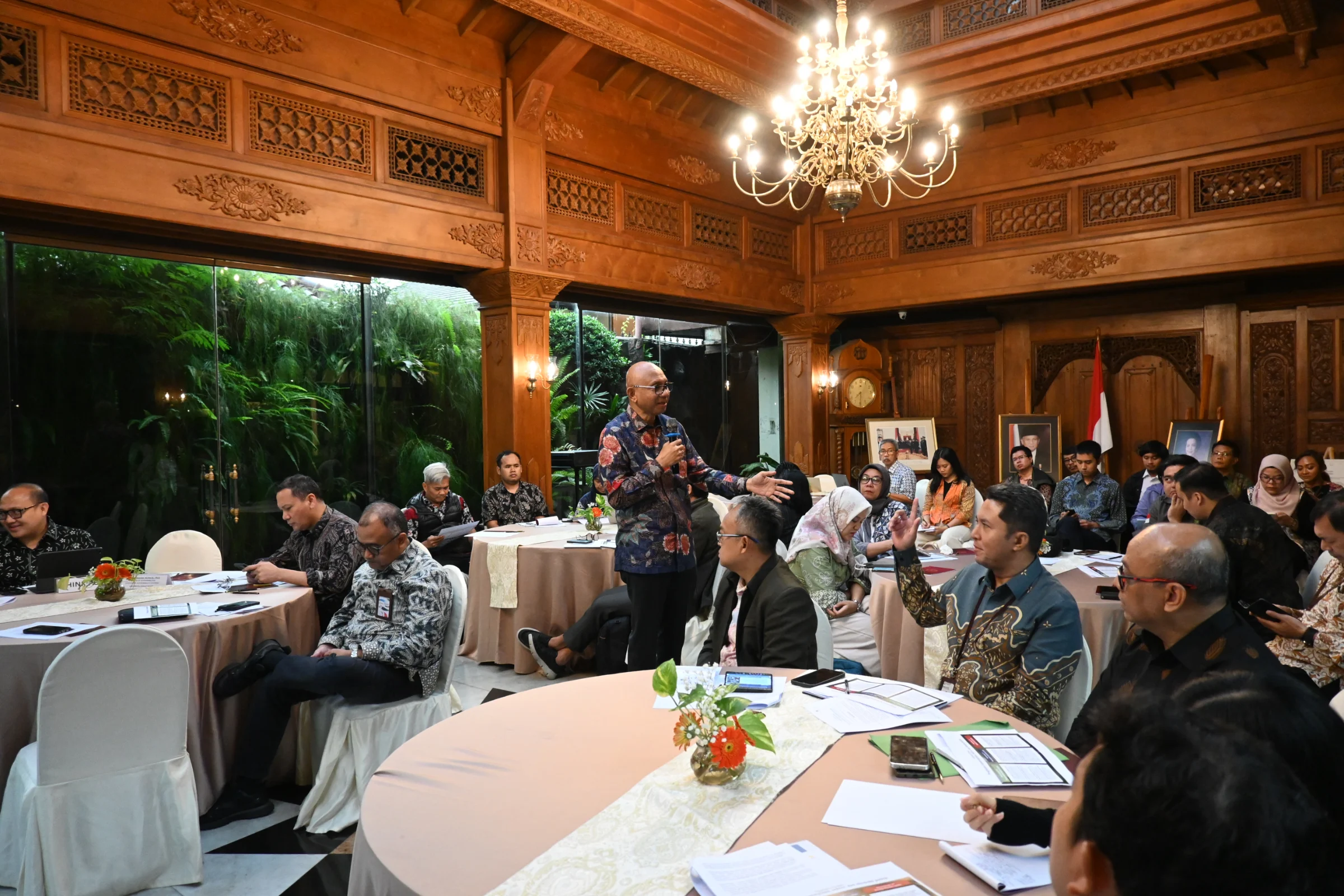
Think Policy facilitated a series of one-on-one engagements and high-level discussions with government stakeholders across ministries. These conversations created space for senior officials to discuss the institutional realities of NDC implementation, including competing priorities, coordination challenges, and the implications of the ongoing regulatory transition.
Rather than focusing solely on compliance requirements, the discussions encouraged ministries to connect climate commitments with their own policy mandates and development priorities. As a result, high-level stakeholders began to develop a stronger appreciation of the political dimensions of NDC implementation, while discussions surfaced a shared recognition of the governance constraints affecting cross-ministerial coordination.
There’s a need to establish a shared understanding in determining sectoral baseline values.Session participant, feedback survey
2. Strengthening institutional understanding of NDC governance
While political ownership was important, effective implementation also required a common understanding of how NDC governance functioned in practice.
Working closely with RCCC UI, Think Policy supported technical stakeholders in navigating the evolving governance landscape following Presidential Regulation No. 110/2025. The collaboration helped ministries better understand institutional responsibilities, coordination arrangements, and the role of Measurement, Reporting, and Verification (MRV) systems in tracking progress toward national climate targets.
These engagements strengthened technical understanding among stakeholders while creating a common reference point for discussions across sectors. As ministries gained clarity on governance arrangements and institutional roles, technical-level stakeholders demonstrated stronger understanding of how their respective sectors contributed to Indonesia’s climate commitments.
The linkages between the NDC and the Net Zero Emissions (NEK) pathway require closer attention, as the number of mitigation efforts are not currently captured within the NDC achievement reporting.Session participant, feedback survey
3. Building a shared diagnosis of governance bottlenecks
Climate governance challenges are often treated as isolated institutional problems. In reality, many stem from fragmented incentives, overlapping mandates, and limited coordination mechanisms across government.
Think Policy and RCCC UI worked with stakeholders to identify and map the institutional bottlenecks affecting NDC implementation. Through consultations, analysis, and dialogue, the project helped ministries collectively examine where governance arrangements were working, where gaps remained, and what improvements were needed.
This produced recommendations that went beyond technical compliance and addressed broader questions of leadership, coordination, and institutional ownership. The recommendations informed efforts to strengthen NDC governance arrangements, including inputs to improve the Ministry of Environment’s MRV framework, support for navigating the regulatory transition, and recommendations to strengthen leadership and coordination mechanisms.
Significant harmonization is still required, particularly with regard to climate action framework and approaches.Session participant, feedback survey
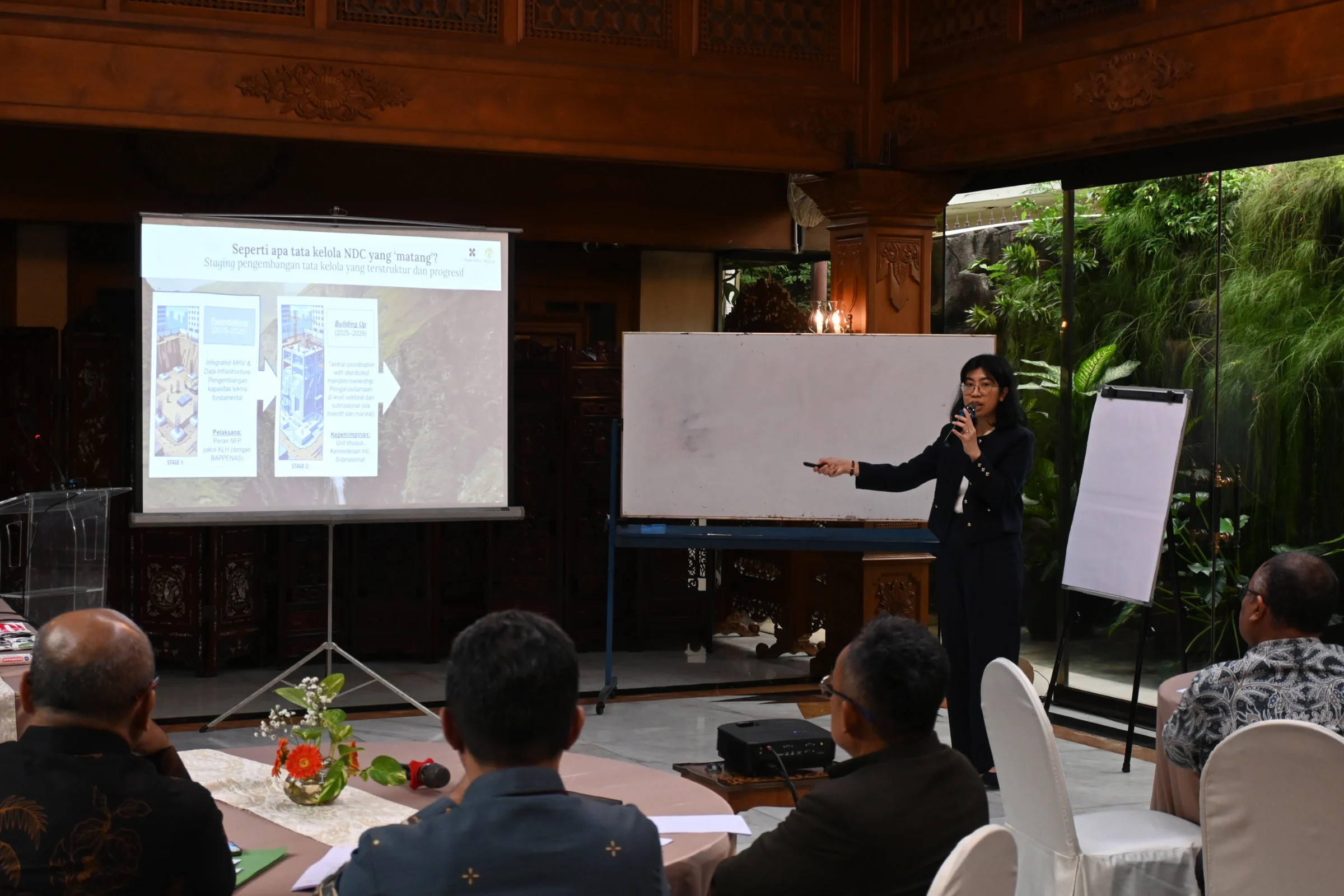
From fragmented climate commitments to shared ownership
The project created a space for cross-sectoral learning and prioritization that had previously been limited within Indonesia’s NDC governance process. By bringing technical teams and senior officials into the same process, ministries were able to examine the challenges of NDC implementation from both technical and institutional perspectives.
At the technical level, relevant ministries were able to surface and better understand sector-specific bottlenecks in Measurement, Reporting, and Verification (MRV). At the senior level, high-level dialogues provided a space to collectively assess these challenges and prioritize potential solutions.
This helped shift the conversation around Indonesia’s NDC. Rather than being viewed primarily as an external compliance obligation, climate commitments could increasingly be connected to ministries’ own sectoral priorities and development outcomes. This matters because Indonesia’s climate targets cannot be delivered by the Ministry of Environment alone. With NDC implementation distributed across 12 coordinating, key, and sectoral ministries, lasting progress depends on institutions taking ownership of the parts of the agenda that intersect with their mandates.
Creating a pathway for institutional adoption
The project also strengthened the Ministry of Environment’s capacity to navigate the complexity of NDC governance and MRV as the lead institution for national coordination.
As the Ministry continued to establish its role under the new regulatory framework, its focal point for the NDC and MRV process expressed interest in addressing the governance challenges emerging across sectors. Recommendations generated through the project are being considered for adoption within the Ministry’s existing MRV process, creating an initial pathway for the work to become embedded beyond the project-supported discussions.
The cross-sectoral dialogue also brought multiple ministries into a shared prioritization process, an important shift in how NDC implementation challenges could be understood — as ones that require coordination across institutions.
Laying the foundations for more coordinated climate governance
The project’s most important contribution was not a single new policy instrument or technical solution. It was strengthening the foundations for a more coordinated NDC governance process, particularly by creating shared understanding of sectoral challenges and generating evidence that can help align climate action with Indonesia’s broader development priorities.
The experience offers a broader lesson: when a national agenda cuts across institutions, technical compliance alone is not enough to secure implementation. Political ownership and shared understanding need to be built alongside the technical systems that track progress.

A pathway that runs in two directions at once
Technical systems that measure progress
Interoperable carbon accounting and MRV so progress toward national targets is legible across sectors.
Political ownership that enables progress
Senior-level engagement that connects climate commitments to each ministry’s own mandate and priorities.
Climate as a shared mandate
Framing NDC delivery not as an added burden but as part of every ministry’s contribution to national development.